Palm reading gains m
Why Palmistry Still Matters in 2026
You might be thinking, "Isn't palm reading a little old-school?" Here's the thing, though: interest in hand analysis has actually exploded in recent years. As more people hunt for personalized, introspective tools for self-discovery — especially in a world dominated by algorithms and generic career advice — palmistry delivers something refreshingly tangible. You look at your own hand, trace the lines, and connect what you see to your lived experience. And honestly, that's exactly why how to read palm lines for career success has become such a hot topic lately. It's not about predicting the future with certainty; it's about uncovering patterns that might already be shaping your professional choices. Think of it as a mirror for your ambitions rather than a crystal ball.
Career coaches and self-development enthusiasts increasingly use hand analysis as a complementary tool for spotting natural talents and work preferences. When you learn how to read palm lines for career success, you're essentially giving yourself a head start on understanding your own career path and professional growth. In 2026's ultra-competitive landscape, that kind of self-awareness and personal insight is genuinely valuable.
The Major Palm Lines and Career Guidance Basics You Need to Know
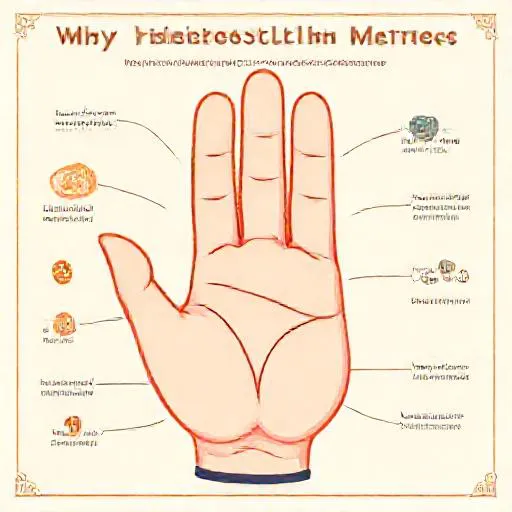
Before we dive into career specifics, let's cover the foundational lines. Every palm has three major lines that form the backbone of any hand analysis and palmistry reading. Understanding these is step one for anyone curious about how to read palm lines for career success:
- The Life Line: Curves around the base of the thumb. Despite the name, it doesn't predict how long you'll live. It reflects vitality, energy levels, and major life transitions — all of which affect your career stamina and professional endurance.
- The Head Line: Runs horizontally across the middle of the palm. This is the line of intellect, decision-making, and thought patterns. For career purposes, this is arguably the most important line — it's central to understanding how to read palm lines for career success.
- The Heart Line: Sits above the Head Line, running toward the index or middle finger. It governs emotions, relationships, and — yes — your emotional relationship with work.
There's also the Fate Line (sometimes called the Career Line), which runs vertically up the center of the palm. We'll spend extra time on that one because it's directly tied to your professional trajectory and career development.
The Fate Line and Professional Trajectory: Your Career's Roadmap
If you're serious about how to read palm lines for career success, the Fate Line is your best friend. This vertical line typically starts near the base of the palm and extends upward toward the middle finger. Here's how to interpret it:
Strong, Unbroken Fate Line and Career Stability
A deep, continuous Fate Line suggests a clear sense of purpose and a relatively stable career path. People with this line tend to know what they want early on and pursue it with determination. If yours looks like this, you likely thrive in structured environments where long-term goals and professional ambition are rewarded.
Faint or Fragmented Fate Line and Career Adaptability
A lighter or broken Fate Line doesn't mean career failure — far from it. It often indicates someone who reinvents themselves multiple times throughout their professional life. Entrepreneurs, freelancers, and creatives frequently have this pattern. It signals adaptability and a willingness to pivot when circumstances change — a key insight when learning how to read palm lines for career success.
Late-Starting Fate Line and Career Reinvention
If your Fate Line begins higher up on the palm (closer to the center rather than the wrist), it may suggest that your career truly takes off later in life. Late bloomers, take note — this is a common pattern among people who find their calling after exploring several different fields. This pattern is a great example of why how to read palm lines for career success isn't just for twenty-somethings.
Multiple Fate Lines and Multitasking Careers
Some palms show two or even three Fate Lines running parallel. This is often associated with juggling multiple careers or side projects simultaneously. If you're someone who can't pick just one thing, your hand might reflect that versatility and entrepreneurial spirit.
The Head Line, Decision-Making, and Strategic Thinking
Your Head Line reveals how you think, and how you think directly impacts how you work. Let's break down the key variations that matter for how to read palm lines for career success:
Long, Straight Head Line and Analytical Careers
This indicates logical, analytical thinking. People with this pattern tend to excel in fields like finance, engineering, law, and data analysis — anything that rewards precision and structured reasoning.
Curved Head Line and Creative Industries
A Head Line that curves downward toward the Mount of Moon (the fleshy area opposite the thumb) suggests creativity and imagination. These individuals often shine in design, marketing, writing, and other creative industries where out-of-the-box thinking is valued.
Short Head Line and Fast-Paced Action
A shorter Head Line doesn't mean less intelligence — it typically points to quick decision-making and a preference for action over prolonged deliberation. People with this trait often do well in fast-paced environments like sales, emergency services, or startup culture.
Deep vs. Shallow Head Line and Concentration Levels
A deeply etched Head Line suggests intensity of thought and strong concentration. A shallower line may indicate a more scattered thinking style — which can be both a challenge and a strength, depending on the role.
The Mounts and Natural Talents: Energy Zones for Professional Strengths
The fleshy pads at the base of each finger are called mounts, and each one corresponds to different qualities relevant to your career. When figuring out how to read palm lines for career success, these mounts are essential checkpoints for spotting natural talents and professional strengths:
- Mount of Jupiter: Ambition, leadership, and self-confidence. A well-developed mount here suggests natural leadership ability — great for management roles.
- Mount of Saturn: Discipline, responsibility, and structure. Strong here? You might thrive in project management or any role requiring serious organization.
- Mount of Apollo: Creativity, recognition, and charisma. A prominent Apollo mount often appears in performers, public speakers, and brand builders.
- Mount of Mercury: Communication, negotiation, and commercial instinct. This is the mount of salespeople, marketers, and entrepreneurs.
- Mount of Venus: Passion, energy, and interpersonal warmth. Strong Venus energy can make someone a natural people leader or team builder.
- Mount of Moon: Intuition, imagination, and emotional intelligence. Valuable in counseling, HR, and creative strategy roles.
When reading for career success, look at which mounts are most prominent. Those are likely your natural zones of strength — and they're a huge part of mastering how to read palm lines for career success.
The Sun Line and Professional Recognition: Visibility in Your Career
Running vertically below the ring finger, the Sun Line (also called the Apollo Line) is associated with recognition, reputation, and personal fulfillment in your work. A clear Sun Line often indicates someone who achieves visibility in their field — whether through awards, public recognition, or simply being known as a trusted expert.
If your Sun Line is strong, you may be drawn to roles where your name and reputation matter: consulting, entertainment, publishing, public speaking, or leadership positions. If it's faint or absent, don't worry — it simply means your career satisfaction comes from the work itself rather than external accolades. Either way, this line adds nuance to how to read palm lines for career success.
Finger Shapes and Career Compatibility: Risk Tolerance and Temperament
Finger proportions add another layer of insight. In hand analysis, the ratio between your index finger and ring finger has been studied in relation to risk tolerance and competitiveness — traits highly relevant to career choices. This is a lesser-known but powerful angle for how to read palm lines for career success:
- Longer ring finger: Often associated with risk-taking, competitiveness, and drive. These individuals may gravitate toward entrepreneurship, trading, or high-stakes sales.
- Longer index finger: Associated with thoughtfulness, diplomacy, and detail orientation. These traits suit roles in research, education, law, and strategic planning.
- Equal length: Suggests a balanced approach to risk and caution — ideal for managerial roles that require both boldness and prudence.
Finger shape matters too. Pointed fingertips suggest intuition and creative thinking, while square fingertips indicate practicality and a methodical approach. Spatulate fingertips often belong to people who love hands-on problem-solving and building things.
The Girdle of Venus and Emotional Intelligence: Workplace Empathy
The Girdle of Venus is a semi-circular line (or series of lines) that arcs above the Heart Line, typically running from the index finger to the pinky. When present, it's associated with high emotional sensitivity, empathy, and social awareness — qualities that are increasingly valued in modern workplaces.
People with a strong Girdle of Venus often excel in roles that require emotional intelligence: human resources, therapy, coaching, customer experience, and leadership that prioritizes team well-being. In 2026's workplace landscape, where burnout and workplace culture are front-and-center concerns, this trait is more valuable than ever. Understanding this line is a crucial piece of how to read palm lines for career success in the modern era.
Reading the Whole Palm and Career Assessment: Putting It All Together
Here's the key insight that separates a good palm reading from a random one: you never interpret a single line in isolation. A strong Fate Line means something different on a hand with a long Head Line versus one with a short Head Line. Context matters enormously when you're learning how to read palm lines for career success.
When assessing career potential, follow this sequence:
- Step 1: Start with the Fate Line to get a sense of overall career trajectory and stability.
- Step 2: Examine the Head Line to understand thinking style and decision-making patterns.
- Step 3: Check the mounts for natural strengths and energy zones.
- Step 4: Look at the Sun Line and Girdle of Venus for recognition potential and emotional intelligence.
- Step 5: Consider finger shapes and proportions for temperament and risk tolerance.
- Step 6: Cross-reference everything. Do the insights align? Do they contradict? Both outcomes are informative.
Practical Tips and Career-Focused Palm Reading Techniques
If you're doing a reading on yourself or someone else, here are some practical pointers to keep in mind as you master how to read palm lines for career success:
- Use natural light. Palm lines are easier to see in daylight. Artificial lighting can wash out faint lines.
- Observe both hands. In traditional palmistry, the non-dominant hand shows inherited potential, while the dominant hand shows what you've developed through effort and choice. The difference between the two is often the most interesting part.
- Take photos. Photographing your palms lets you zoom in and compare details you might miss at first glance.
- Avoid determinism. No line guarantees success or failure. Palmistry is a reflective tool, not a fixed prediction. Your choices and effort matter far more than any line.
- Keep a journal. As you track your career over time, revisit your palm readings. You may notice interesting correlations between dominant lines and real-world career shifts.
Hand Shapes and Ideal Work Environments: Finding Your Fit
Beyond specific lines, the overall shape and texture of your hand can hint at the work environments where you're most likely to thrive. This is another layer of how to read palm lines for career success that many people overlook:
- Earth hands (square palm, short fingers): Practical, grounded, and reliable. These individuals thrive in hands-on roles, operations, construction, engineering, and any environment where tangible results matter.
- Air hands (square or rectangular palm, long fingers): Intellectual, communicative, and curious. Ideal for roles in education, writing, media, and analysis.
- Fire hands (rectangular palm, short fingers): Energetic, competitive, and action-oriented. Best suited to entrepreneurship, sales, sports, and fast-moving industries.
- Water hands (rectangular palm, long fingers): Intuitive, empathetic, and creative. Drawn to artistic pursuits, healing professions, counseling, and design.
Common Myths and Palm Reading Misconceptions About Career
Let's clear up a few misconceptions you might have encountered about how to read palm lines for career success:
- Myth: "A short Life Line means a short career." Reality: The Life Line has nothing to do with career duration. It reflects vitality and energy — take care of yourself, and your career benefits regardless of line length.
- Myth: "If you don't have a Fate Line, you won't succeed." Reality: Plenty of successful people have faint or absent Fate Lines. A missing line simply suggests a career path shaped more by exploration than by a predetermined route.
- Myth: "Palm reading can predict your exact job." Reality: Palmistry highlights tendencies and strengths. It won't tell you the specific title on your business card, but it can point toward natural aptitudes worth developing.
So the next time you're at a professional crossroads — considering a promotion, a career change, or a side project — take a moment to look at your palms. Not because the lines dictate your destiny, but because they invite you to ask better questions about your goals, your instincts, and the path you're building for yourself. In 2026's fast-changing professional landscape, mastering how to read palm lines for career success might just be your greatest competitive advantage.