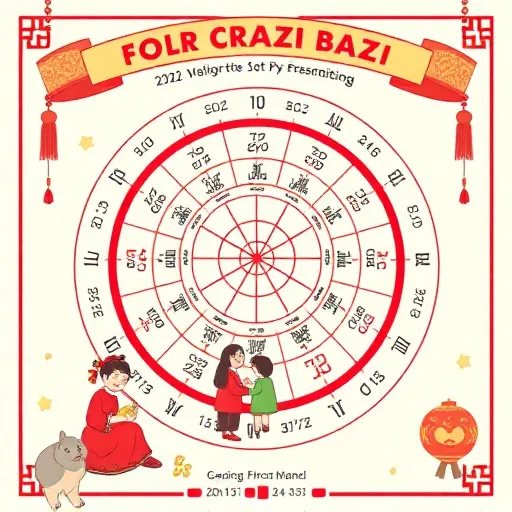
Bazi astrology for l
What Is a Bazi Chart, and Why Does It Matter for Marriage?
So you've heard about Bazi, the Four Pillars of Destiny, and you're wondering what all the fuss is about—especially when it comes to love and marriage. Let's break it down. Bazi is an ancient Chinese astrology system that maps your entire life using nothing but your birth date and birth time. The word itself literally means "eight characters," and that's because your chart is built from four pillars—year, month, day, and hour—each one represented by two characters drawn from the Heavenly Stems and Earthly Branches. Pretty wild, right?
Here's why Bazi is such a powerhouse for marriage analysis: it digs into the underlying elemental dynamics of your personality, your emotional needs, and the way you connect with others. Unlike Western astrology, which mainly focuses on the sun sign at birth, Bazi considers the full time spectrum—right down to the two-hour segment you were born in. That level of precision is exactly why professional practitioners treat Bazi as one of the most accurate systems for decoding relationship dynamics. When you dive into how to read a bazi chart for marriage luck, you're working with a level of detail that sun-sign astrology just can't match.
The Four Pillars and Heavenly Stems: A Quick Breakdown of Your Birth Chart
- Year Pillar: Represents your ancestral background and early environment
- Month Pillar: Reflects your career, social circle, and parents
- Day Pillar: The big one for marriage—it reveals your core self and spouse palace
- Hour Pillar: Governs your inner world, children, and later life
For marriage luck specifically, the Day Pillar is your main focus. The Day Master—that's the Heavenly Stem of your day pillar—represents you, while the Day Branch—the Earthly Branch—represents your spouse palace. Together, they lay the foundation for your entire marriage analysis. If you only learn one thing about how to read a bazi chart for marriage luck, make it this: the Day Pillar is where the magic happens.
The Day Master and Five Elements: Your Personality Blueprint in Bazi Astrology
When you're figuring out how to read a bazi chart for marriage luck, step one is identifying your Day Master. This is the Heavenly Stem sitting in your day pillar, and it's usually expressed through one of the Five Elements—Wood, Fire, Earth, Metal, or Water—combined with either Yin or Yang polarity. Your Day Master says a ton about your relationship style. A Yang Wood Day Master, for example, tends to be direct and growth-oriented in love, while a Yin Water Day Master is usually more adaptable and emotionally intuitive. Knowing your Day Master helps you spot your natural tendencies in partnerships—and that's a huge part of how to read a bazi chart for marriage luck.
Reading the Spouse Palace and Earthly Branches for Relationship Insights
The Day Branch—aka the spouse palace—is where your partner's energy lives in your chart. Here's how to interpret it:
- Element compatibility: If the element of your spouse palace supports or harmonizes with your Day Master, that's a good sign for a supportive relationship
- Clashes and combinations: If your spouse palace is caught in a clash with other branches, it might point to relationship instability or delayed marriage timing
- Favorable interactions: Combinations involving the spouse palace often signal strong emotional bonding and mutual attraction
A skilled practitioner analyzing a Bazi chart will always check whether the spouse palace is stable, supportive, or challenged by surrounding elements. This gives a clear read on the quality of marital energy you carry—and it's a non-negotiable step in how to read a bazi chart for marriage luck.
The Spouse Star and Wealth Element: Locating Love in Your Destiny Chart
Beyond the spouse palace, Bazi uses something called the spouse star to gauge marriage luck. The rule is pretty straightforward:
- For those with a Yang Day Master (traditionally male charts), the spouse star is the Wealth element— for the proper wife, for romantic encounters
- For those with a Yin Day Master (traditionally female charts), the spouse star is the Authority element— for the proper husband, for romantic partners
Locating and analyzing the strength of the spouse star is one of the most critical steps in how to read a bazi chart for marriage luck. If the spouse star is abundant and well-positioned, it usually points to stronger romantic opportunities. If it's weak, missing, or under attack from clashing elements, it may suggest delays or challenges in the marriage department.
A Practical Example: Yin Metal Day Master and the Fire Spouse Star
Picture a female chart with a Yin Metal Day Master. Her spouse star would be Fire (the Authority element). If her chart is rich in Fire and Fire is a favorable element for her, that suggests strong marriage prospects. But if her chart is flooded with Water—which controls Fire—her spouse star may be weak, hinting at potential delays or the need for conscious effort to maintain relationships. This is exactly the kind of nuance you pick up when you learn how to read a bazi chart for marriage luck.
Luck Pillars and Annual Pillars: Marriage Timing and Romantic Opportunities
One of the most common questions people ask about how to read a bazi chart for marriage luck is: "When will I get married?" In Bazi astrology, timing is calculated using Luck Pillars and Annual Pillars. Luck Pillars are ten-year cycles that represent the dominant element and energy of a specific life phase. When a Luck Pillar brings in your spouse star or activates your spouse palace, it often signals a window of heightened marriage potential.
- Spouse star appearances: When a Luck Pillar or Annual Pillar introduces the element representing your spouse star, romance often intensifies
- Spouse palace activation: If an Annual Pillar combines with your Day Branch (spouse palace), this can trigger major relationship developments—sometimes marriage itself
- Elemental alignment: Years that bring favorable elements for your Day Master often coincide with emotional fulfillment and relationship growth
Red Flags in Marriage Timing: Clashes, Peach Blossom, and Elemental Imbalance
Not every activation is positive. If an Annual Pillar clashes with your spouse palace—say, a Rabbit year for someone with a Rooster spouse palace—this might bring relationship tension rather than nuptials. A seasoned analyst would advise caution during such years, recommending patience instead of rushing into commitments. Other red flags include an overload of Peach Blossom stars, which can signal romantic complications or difficulty settling down, and a completely missing spouse star, which traditionally suggests marriage may come later in life or require more proactive effort. A spouse palace clash in the natal chart can also point to instability—not necessarily divorce, but periods of upheaval that call for extra communication. Understanding these patterns is a key part of how to read a bazi chart for marriage luck, because awareness lets you prepare and respond constructively.
Five Elements Compatibility: Wood, Fire, Earth, Metal, and Water in Partnerships
Elemental balance is a cornerstone of Bazi marriage analysis. Each element carries specific energetic qualities that shape how partners relate to each other:
- Wood: Growth, generosity, and expansion—Wood types often nurture their partners
- Fire: Passion, charisma, and expression—Fire types bring excitement but can be volatile
- Earth: Stability, reliability, and care—Earth types make devoted and grounded partners
- Metal: Structure, loyalty, and principle—Metal types value commitment and integrity
- Water: Adaptability, wisdom, and emotional depth—Water types are intuitive and fluid in love
When analyzing marriage luck, a practitioner checks whether the chart's elements flow harmoniously or create friction. A chart where the spouse palace element supports the Day Master, and where the spouse star is well-nourished, is considered highly favorable for lasting partnership. This elemental compatibility check is fundamental to how to read a bazi chart for marriage luck—and it's also useful for synastry, where you compare two Bazi charts to see where energies harmonize and where friction might arise.
Combining Bazi Insights With Practical Relationship Advice and Self-Awareness
Reading a Bazi chart for marriage luck isn't about fatalism—it's about self-awareness. The chart shows tendencies, not absolute outcomes. If your chart indicates a tendency toward impulsiveness in love, you can consciously practice patience. Understanding your marriage windows helps you recognize when to be open to commitment. When your chart's energy supports relationship growth, lean into it—plan proposals, make major decisions, or simply invest more in connection. Many modern practitioners stress that Bazi is a tool for empowerment: it doesn't dictate your fate; it illuminates the terrain so you can navigate it more skillfully. That philosophy is why Bazi keeps growing in popularity among people seeking genuine self-understanding—and why learning how to read a bazi chart for marriage luck can be such a rewarding journey into self-discovery.